Evaluating Self-Esteem Workbook Templates: A Focus on Canva's Done-For-You Handbooks
For coaches, content creators, and entrepreneurs aiming to support clients or build their own personal development resources, pre-designed templates can be a significant time-saver. The market offers various formats and approaches, from editable PDFs to complex design software files. Among these, Canva Self Esteem Handbook Templates represent a distinct category: fully designed, A4-format workbooks intended for immediate editing and use within the Canva platform. Understanding what this product entails, its inherent trade-offs, and how it compares to broader alternatives is crucial for making an informed resource decision.
The Core Concept of Done-For-You Canva Templates
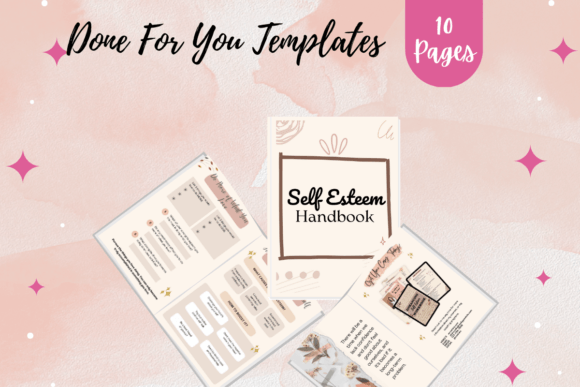
Canva Self Esteem Handbook Templates are not a software tool or a service, but a pre-packaged digital product. The core offering is a set of visually designed pages—typically 10 in this case—with placeholder text and graphics focused on self-esteem themes like overcoming challenges, discovering strengths, and achieving goals. The "done for you" aspect means the foundational content and layout is complete; you receive exactly what is shown in the product listing. The key distinction is that these templates are formatted specifically for Canva, a popular web-based design application. This means there is no need to install additional software or manage font files, as everything operates within Canva’s ecosystem.
Comparing Formats and Access Points
When evaluating resources for creating a self-esteem lead magnet or mini-course, format and accessibility are primary decision factors. Alternatives often include:
- Generic PDF Worksheets: These are static documents. They offer content but provide limited design customization. You can add text boxes in some editors, but overhauling the layout is difficult.
- Microsoft Word or Google Docs Templates: These offer greater text editing flexibility but usually lack sophisticated design elements. Creating a visually "beautiful and minimalist" output requires considerable design skill within those word processors.
- Full Design Software Files (e.g., Adobe InDesign): These provide maximum customization but require specialized software, expertise, and time to adapt. They are not a "minutes" solution for most.
- PLR (Private Label Rights) Articles or E-books: These are often text-heavy content packs. They grant broader usage rights (like republishing) but leave the design, formatting, and workbook structuring entirely to the buyer.
The Canva Self Esteem Handbook Templates sit between these options. They provide a structured, designed workbook framework with editable text, but confine the customization to the tools and elements available within Canva. This is a significant strength for users familiar with or willing to use Canva, but a limitation if one prefers or requires another design environment.
Analyzing Strengths and Ideal Use Cases
The prominent strengths of this product align with specific user profiles and business needs.
Time Efficiency and Focus: The promise is to "spend less time designing and more time on running your business." For a solopreneur, influencer, or coach without dedicated design resources, this is a tangible benefit. The templates allow for personalization—you can infuse your own style and color scheme—without starting from a blank page. This makes them a potential fit for those aiming to quickly produce a professional-looking lead magnet to attract clients or supplement a course.
Low Technical Barrier: Since no software installation or font management is needed, it removes common technical hurdles. This is particularly advantageous for bloggers or content creators who may not consider themselves designers but are comfortable with intuitive, drag-and-drop platforms like Canva.
Flexibility in Application: The product description notes the material can be reused as a freebie or sold. This versatility is valuable. A course creator could use the handbook as a bonus module, while a coach might offer it as a standalone reflective tool for clients. The A4 format is also universally compatible for digital PDF distribution or even local printing.
When Canva Self Esteem Handbook Templates Are a Strong Fit
This product is likely the right choice when the following conditions apply:
- The primary goal is to obtain a visually complete starting point that requires only content adaptation and brand alignment, not structural redesign.
- The user already uses, or is willing to learn, Canva for design tasks.
- The need is for a swift turnaround: creating a resource "in minutes" to support a launch, marketing campaign, or client offering.
- The target audience appreciates a clean, minimalist aesthetic, which these templates are designed to facilitate.
- The user intends to apply the workbook specifically within the realms of self-esteem, confidence-building, or personal growth, as the pre-written themes are centered on those areas.
Understanding Limitations and Trade-offs
Like any templated product, there are trade-offs to consider. A balanced evaluation requires acknowledging these points.
Platform Dependency: The templates are only editable within Canva. If your workflow is anchored in another design suite, or if you require offline editing in a more powerful application, this product may not integrate smoothly. It is essentially a Canva-specific asset.
Content Scope: The handbook includes done-for-you content on specific topics (e.g., overcoming challenges). While this saves writing time, it may not cover every niche aspect of self-esteem your program requires. You will need to assess whether the pre-written sections align perfectly with your methodology or if significant content rewriting is necessary, which diminishes the "done for you" advantage.
Customization Depth: "Fully customizable" within Canva means you can change colors, text, images, and element positions. However, the underlying page structure and number of pages (10) is fixed. You cannot easily add entirely new page types or radically alter the layout grid without more advanced Canva skills. It is customization within a defined framework.
When Another Option Might Be Necessary
Readers might need to explore alternatives if:
- They require a self-esteem resource that delves into highly specialized or clinical approaches not touched upon in generic "strength discovery" frameworks.
- Their brand or audience demands a unique, non-minimalist visual style that would require overhauling the template's core design beyond simple color and font changes.
- They operate in a context where they cannot use Canva, perhaps due to organizational IT policies or a preference for owning design files in another format (like .indd or .sketch).
- They seek broader PLR rights that allow them to repurpose the text content into completely different mediums (like video scripts or blog series) without the design container.
Practical Considerations for Decision-Making
Making a final choice involves weighing practical factors beyond the product description.
Cost vs. Value of Time: Compare the template's price against the hours you would invest designing a similar workbook from scratch or hiring a designer. For many solo business owners, the time savings justify the cost, even if some content adaptation is needed.
Integration with Existing Materials: Consider how this 10-page handbook would fit with your other offerings. Could it function as a concise mini-course, as suggested? Does it complement your existing coaching modules, or would it stand alone as a lead magnet? Its utility increases if it seamlessly slots into your current educational ecosystem.
Long-Term Reusability: The ability to reuse the material as a freebie or for sale is a noted benefit. Evaluate whether the template's design and topic focus are broad enough to remain relevant for your audience over multiple uses or campaigns. A highly generic design might serve longer than a very trendy one.
Ultimately, Canva Self Esteem Handbook Templates are a specialized solution for a specific need: quickly generating a stylish, themed workbook within the Canva environment. They are not a universal design tool nor a comprehensive content library. Their value is concentrated in the intersection of ready-made design, self-esteem topic focus, and Canva usability. For the adult professional—whether a coach, creator, or entrepreneur—whose situation matches that intersection, these templates can be a effective resource that balances quality, speed, and personalization. For those whose needs fall outside that overlap, the broader market of PLR content, customizable PDFs, or professional design services may offer a more suitable path.