Exploring the Versatility of Pleasing Word in Digital Asset Packages
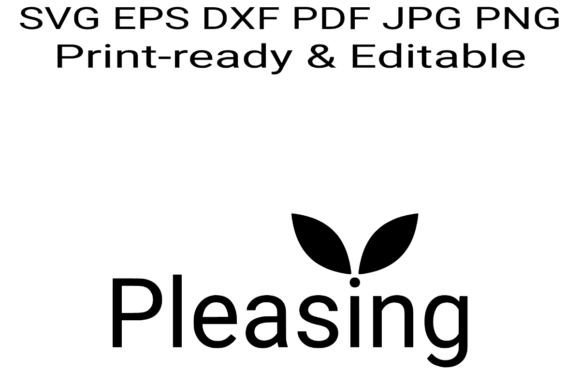
In the expansive world of digital content creation, the term Pleasing Word represents more than just a phrase; it embodies the principle of aesthetic harmony and communicative clarity within design. This concept becomes particularly tangible when it is realized as a high-quality digital asset, packaged for immediate use and adaptation. A common offering, which brings this principle to life, is an instant download containing a comprehensive suite of files centered around a specific design, often a Pleasing Word graphic or typographic artwork.
The Anatomy of a Comprehensive Digital Download Package
When you acquire such a product, you typically receive a ZIP folder. This archive is not a single file but a curated toolkit. Its contents are meticulously prepared to serve a wide array of technical and creative needs. The core often includes a high-resolution raster image at dimensions like 4600 × 4600 pixels. At 300 DPI, this translates to a physical size of 15.33 × 15.33 inches, ensuring print-ready quality without pixelation. This image is usually provided in two formats: a PNG with a transparent background for easy layering, and a JPG with a white background for straightforward use on light surfaces.
Beyond static images, a PDF document is frequently included. This serves as a stable, universally viewable reference, useful for documentation, client presentations, or simple proofs. For those working in technical design or manufacturing, a DXF CAD file is a critical inclusion. This format allows the design to be imported into computer-aided design software for precise scaling, modification, and integration into technical drawings, especially for fabrication.
The Power of Vector Formats: SVG and EPS
Perhaps the most flexible elements in such a package are the vector formats: SVG and EPS. A vector file does not store an image as a grid of pixels. Instead, it defines the shapes, lines, and colors of the design using mathematical paths. This means the design can be scaled to any size—from a tiny keyholder to a large banner—without any loss of quality or sharpness. The edges remain crisp, and the colors remain solid.
This scalability is transformative. It means a single Pleasing Word design asset is not confined to one use. With software like Adobe Illustrator, CorelDRAW, or even free tools like Inkscape, the SVG or EPS file can be opened. The text can be recolored, individual elements can be separated, additional graphical components can be merged, or the layout can be entirely rearranged. The phrase "by which the design can be modified as need" is the central promise of these formats. They grant the user creative ownership, turning a purchased asset into a foundational template for personalized projects.
Diverse Applications Across Industries and Hobbies
The utility of such a package is defined by its application potential. It is described as perfect for printing on a vast range of physical goods: t-shirts, mugs, cushions, key holders, phone covers, cards, and stickers. This list speaks directly to the custom merchandise and small business market. An entrepreneur can use the transparent PNG to overlay the Pleasing Word design onto a mockup of a t-shirt in an online store. They can use the vector EPS to send a perfectly scaled version to a mug printing service.
However, the applications extend far beyond physical print-on-demand products. The same asset is potent for digital and professional use. For instance, the SVG file can be directly embedded into a website's code, rendering the Pleasing Word as a crisp, scalable logo or icon that looks perfect on any screen resolution. In graphic design projects, the elements can be extracted to build logos, enhance infographics, or create illustrations. Educators might incorporate the visual into teaching materials, while researchers could use it in presentation slides to emphasize a key concept attractively.
The phrase "any projects that might have" is intentionally broad. It acknowledges that creativity is unbounded. A hobbyist might use the design for a custom vinyl decal on a model car. A non-profit might incorporate it into the layout of a fundraising brochure. A business owner could integrate it into the header of their internal report template. The high-resolution and vector files remove technical barriers, allowing the content to flow into virtually any medium.
Key Considerations for Users and Creators
Understanding the nature of the download is crucial. It is a digital download; no physical items are shipped. The value is in the intellectual property and the file set itself. This model offers immediate access and eliminates shipping costs and wait times, but it requires the user to have the basic knowledge and tools to utilize the files. Familiarity with common software for viewing and editing PNG, JPG, PDF, and particularly SVG/EPS/DXF files is important.
For professionals, the inclusion of a DXF file highlights considerations for manufacturing. If the Pleasing Word design is intended for use in CNC routing, laser cutting, or engraving, the DXF format provides the clean paths needed for machines to follow accurately. This bridges the gap between graphic design and physical production.
The 300 DPI raster images assure print quality, but users must remember that effective print size is limited by the pixel dimensions. While the vector files can scale infinitely, a 4600x4600 pixel JPG is best used within its intended size range to maintain sharpness. Knowing which file to use for which context—PNG for digital compositing, JPG for simple prints, vectors for scalable outputs, DXF for machines—is part of the practical expertise gained from using such packages.
Integrating Pleasing Word Assets into Creative Workflows
How does such a digital asset fit into a real-world workflow? For a graphic designer working on a client's branding project, they might start with the vector EPS file. They could modify the color scheme of the Pleasing Word to match the client's brand palette, perhaps isolating certain letters or decorative elements to use as standalone icons. They could then export a new high-resolution PNG from their modified vector file to provide to the client for web use, and simultaneously use the same vector file to generate artwork for a large format store sign.
For a small online retailer, the workflow might be more straightforward. They download the ZIP, extract the PNG with transparent background, and upload it directly into their print-on-demand service's interface for t-shirts and phone cases. They might use the JPG for creating simple promotional graphics for their social media ads. The PDF could be stored as a reference sheet in their product documentation folder.
An educator or content creator might focus on the SVG format. They could embed the Pleasing Word design directly into an HTML page for an online course, ensuring it displays perfectly on all devices. They could also import it into video editing software to use as an animated title graphic. The modularity of the package supports linear and nonlinear workflows, allowing users to jump to the file type that suits their immediate task.
The principle of Pleasing Word—creating a visually and semantically agreeable element—is thus operationalized through this multi-format approach. The design is not a locked, static artifact. It is a set of instructions (vectors), high-quality snapshots (raster images), and technical drawings (DXF) that empower the user to apply the concept wherever it brings value, maintaining its aesthetic integrity across contexts through technical fidelity.
Ultimately, these digital download packages represent a fusion of design philosophy and practical utility. They offer a bridge between the initial creative vision—the Pleasing Word itself—and its infinite potential applications in the hands of diverse users. By providing the assets in formats that cover digital display, physical printing at various scales, and technical manufacturing, they democratize high-quality design, making it a versatile tool for professionals, entrepreneurs, creators, and hobbyists alike to enhance their projects with clarity and visual appeal.