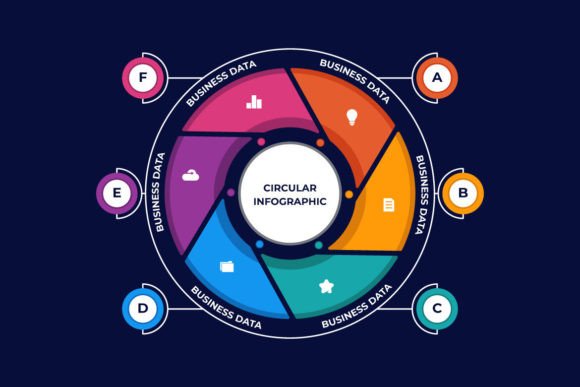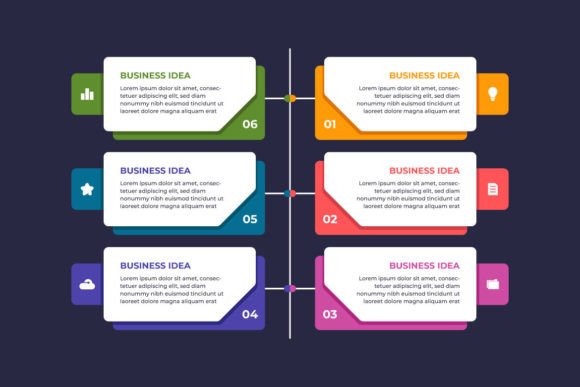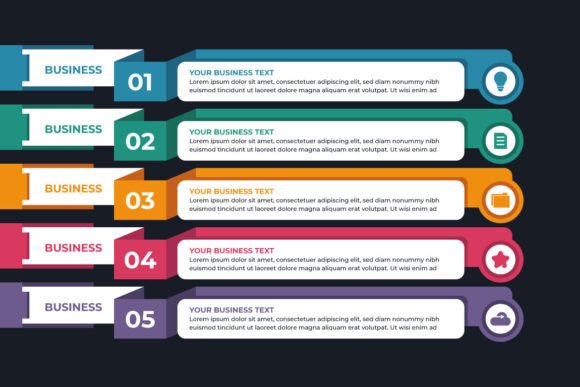
The Strategic Power of a Business Steps Infographic Template
In today's fast-paced digital landscape, clarity and communication are non-negotiable assets. A Business Steps Infographic Template is not merely a decorative graphic; it is a structured visual framework designed to map out the sequential phases, critical actions, or logical progression of a business process, project, or strategy. It transforms complex, multi-stage concepts into an accessible, step-by-step visual narrative. This tool is strategically useful because it serves as a common language, bridging the gap between abstract planning and tangible execution for diverse audiences, from internal teams to potential clients.
Why a Visual Template Becomes a Strategic Asset
The utility of a Business Steps Infographic Template lies in its dual function: it is both a planning instrument and a communication catalyst. For entrepreneurs and small business owners, it forces a disciplined breakdown of a vision into actionable components, revealing dependencies and potential bottlenecks early. For marketers and educators, it provides a compelling medium to explain services, methodologies, or educational pathways, enhancing comprehension and retention. Its thoughtful use directly supports several core objectives.
Clarifying Goals and Enhancing Planning
A blank canvas can be daunting. A structured template provides the scaffolding. When you populate a Business Steps Infographic Template, you are engaging in a practical planning exercise. You must define what the "steps" actually are—are they stages in your client onboarding? Key milestones in a product launch? The phases of your content creation cycle? This act of definition sharpens your goals. It encourages you to think in terms of outcomes for each step, moving from vague ambition to a sequenced roadmap. This visual roadmap then becomes a shared reference point for your team, aligning efforts and reducing miscommunication.
Strengthening Communication and Brand Positioning
Consistency in communication builds trust. Using a well-designed Business Steps Infographic Template across your materials—website, proposals, presentations, social media—creates a recognizable visual pattern for your brand's approach. It tells your audience, "We have a defined, professional process." This can be particularly powerful for service-based businesses like consultants, freelancers, or agencies. It demystifies your work, positions you as systematic and reliable, and improves customer experience by setting clear expectations from the outset. It turns your operational methodology into a marketing asset.
Intentional Application: When and How to Use It
The value of the template is unlocked through intentionality, not random application. It is not a one-size-fits-all solution for every piece of content.
Identifying the Right Use Cases
Consider employing a Business Steps Infographic Template when you need to:
- Explain a multi-stage process internally for training or operational alignment.
- Present a client journey or service pipeline externally to attract and inform customers.
- Map out a strategic initiative or project plan to visualize timelines and responsibilities.
- Break down a complex topic for educational or blog content to improve audience understanding.
- Standardize the documentation of recurring workflows to boost productivity and consistency.
The key is that the subject matter inherently has a sequence, a progression, or a dependency chain. If the information is inherently non-linear, a different visual tool might be more appropriate.
A Strategic Approach to Customization
Never use a template as a mere fill-in-the-blanks exercise. Start with the strategy behind the steps. What is the ultimate outcome this process is designed to achieve? Then, work backwards.
- Define the Scope and Audience: Is this for internal experts or external newcomers? The language and detail in each step will differ drastically.
- Determine the Critical Steps: Distill the process to its essential, non-negotiable phases. Avoid clutter; often 5-7 steps are more impactful than 12 overly granular ones.
- Focus on Action and Outcome: For each step, clarify the action required and the value or result it produces. Use active language: "Conduct Initial Analysis" rather than "Analysis Phase."
- Integrate with Your Brand: Adapt the template's visual style—colors, icons, fonts—to reflect your brand identity, ensuring it feels like a natural part of your ecosystem, not a generic insert.
Grounding Strategy in Realistic Examples
To move from theory to practice, consider these grounded applications.
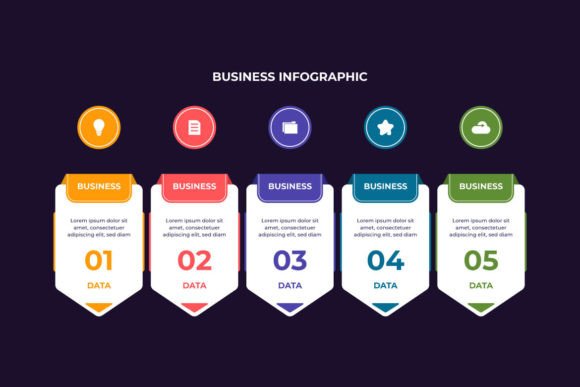
A freelance web developer might use a Business Steps Infographic Template to visually outline their project workflow: Step 1: Discovery & Briefing; Step 2: Wireframe & Proposal; Step 3: Design & Development; Step 4: Testing & Revision; Step 5: Launch & Support. This not only helps clients understand what to expect but also streamlines their own project management and scope negotiations.
A small bakery launching a new online ordering system could map the customer's journey: Step 1: Browse Seasonal Menu; Step 2: Customize Order & Select Date; Step 3: Secure Online Payment; Step 4: Confirmation & Preparation Alert; Step 5: Pickup/Delivery Experience. This visual plan helps the team coordinate technology, kitchen logistics, and customer communication around a clear sequence.
Practical Planning Tips for Maximum Impact
- Leave room for feedback loops. Not every process is purely linear; use visual cues (like arrows circling back) to indicate revision or approval steps.
- Test your infographic with someone unfamiliar with the process. Their questions will reveal gaps in clarity.
- Link the final step to a broader goal. For example, "Step 5: Ongoing Optimization" ties the process to the long-term result of continuous improvement.
- Keep a master template file that you adapt for different purposes, maintaining consistency while allowing for context-specific customization.
Navigating Risks and Avoiding Common Pitfalls
While powerful, a Business Steps Infographic Template used without clear goals or context can introduce risks.
The Peril of Oversimplification
The drive to make things visually simple can sometimes strip out necessary nuance. If a process has important conditional paths ("if X, then do Y; if Z, then do W"), a rigid linear template might mislead. It's crucial to ensure the visual format does not distort the actual operational reality. Complement the infographic with supplementary text or documentation where complexity exists.
Creating a False Sense of Finality
A beautifully polished infographic can imply a process is perfect and unchanging. In dynamic businesses, processes evolve. Treat the template as a living document. Version it, and be prepared to update it as you learn, scale, or pivot. Locking yourself into an outdated visual process can hinder innovation and agility.
Generic Output Without Strategic Alignment
The greatest risk is producing a generic graphic that fails to reflect your unique value proposition. If your "Business Steps" infographic looks and reads like anyone else's, it has missed its strategic purpose. The content within the template must be born from your specific strategy, goals, and customer insights, not just from filling a pre-made shape.
Building Long-Term Value Through Intentional Use
The ultimate aim is to leverage the Business Steps Infographic Template as a tool for continuous improvement. It should serve not only as a communication device but also as a reflection point for your operations. Periodically review the infographic against real-world performance. Are steps taking longer than anticipated? Is a particular step causing client confusion? The visual map makes these discussions more concrete.
For decision-makers and professionals, this template becomes part of your strategic toolkit—a way to codify best practices, train new team members efficiently, and present your business's competence with confidence. It encourages a mindset of process thinking, which is foundational for scaling quality and delivering predictable, excellent results.
By approaching the Business Steps Infographic Template with this level of strategic consideration, you transform it from a simple graphic into an instrument for clarity, alignment, and growth. It becomes a visual embodiment of your business logic, helping you and your audience navigate the journey from concept to successful outcome with greater understanding and purpose.